Rome wished at first to quell rebellion, then to remain master of rich Judea; and then burning with the desire for vengeance resolved upon the destruction of our people and the devastation of our land. But our passions were enflamed to heroic deeds; we burnt and slew, sacrificing our lives without compunction. Men threw themselves under the horses to wound the riders, or leapt boldly upon the spears to break a Roman square. With flaming torches they sprang from the tottering wall onto the platforms of the battering rams, selling their lives but for one hour's delay of the ever-impending triumph.
Yet we had faith. Though day by day the Romans gained we felt the ultimate triumph would be with Israel, and when the camp of Titus was fired, or when he was wounded in leading his discouraged army, we felt we still were the warrior priests. Yet, who could mistake what the eye saw. Men and
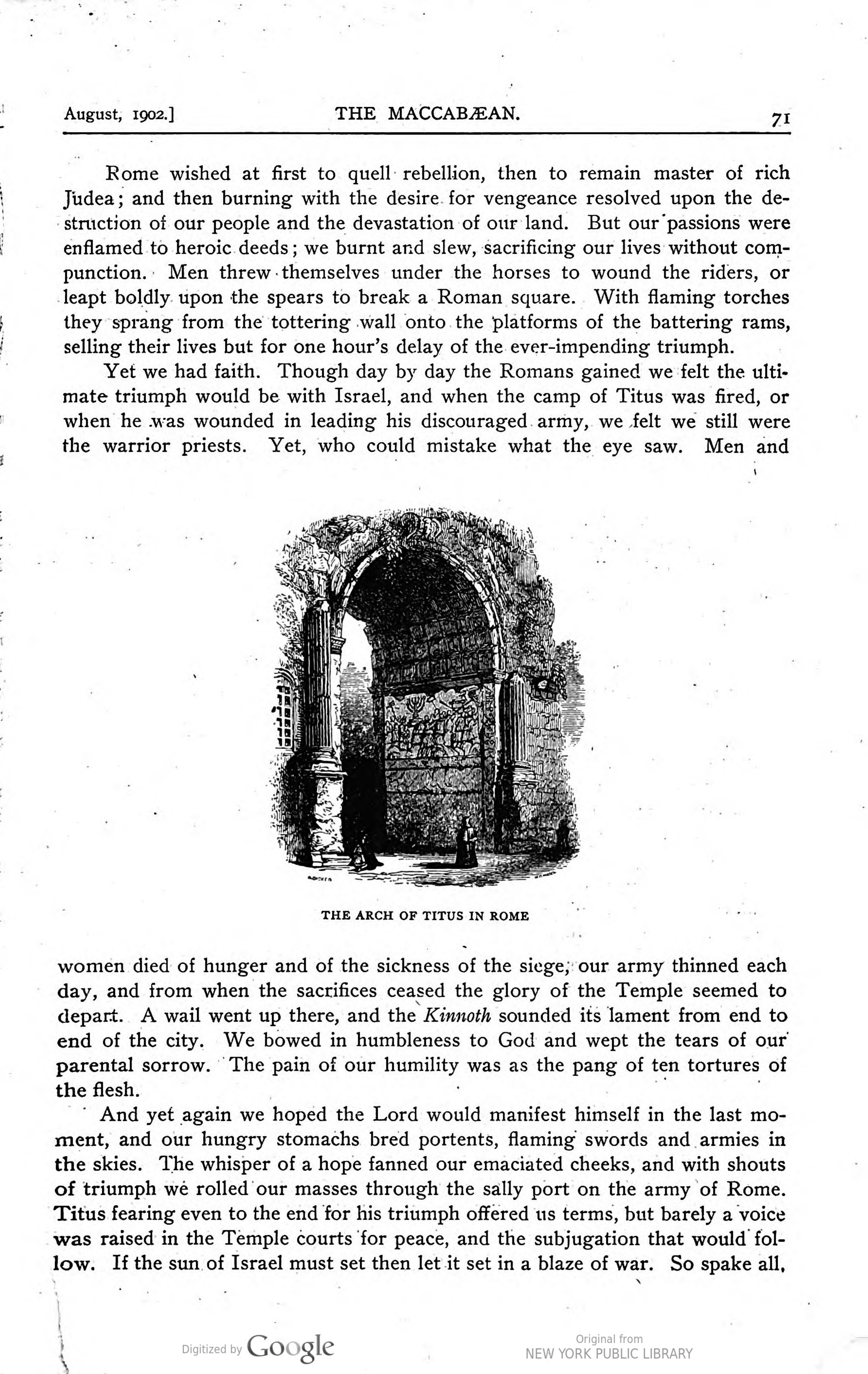
THE ARCH OF TITUS IN ROME
women died of hunger and of the sickness of the siege; our army thinned each day, and from when the sacrifices ceased the glory of the Temple seemed to depart. A wail went up there, and the Kinnoth sounded its lament from end to end of the city. We bowed in humbleness to God and wept the tears of our parental sorrow. The pain of our humility was as the pang of ten tortures of the flesh.
And yet again we hoped the Lord would manifest himself in the last moment, and our hungry stomachs bred portents, flaming swords and armies in the skies. The whisper of a hope fanned our emaciated cheeks, and with shouts of triumph we rolled our masses through the sally port on the army of Rome. Titus fearing even to the end for his triumph offered us terms, but barely a voice was raised in the Temple courts for peace, and the subjugation that would follow. If the sun of Israel must set then let it set in a blaze of war. So spake all,